# AI Agents Are Now Being Used in Real Cyberattacks
AI agents are no longer just a future technology.
They are becoming part of real-world cybersecurity operations.
Taiwan has confirmed that its government agencies were targeted by an AI-assisted cyberattack in July, marking another sign that attackers are beginning to combine artificial intelligence with traditional hacking techniques.
What Happened?
Taiwan's Ministry of Digital Affairs said its cybersecurity teams detected an unusual attack targeting government agencies.
The investigation found that the attackers used a combination of manual operations and AI-agent-assisted techniques.
Taiwan did not publicly identify the attackers or directly blame any country.
The government said the affected agencies successfully handled the incident and strengthened their security measures.
AI Was Part of the Attack
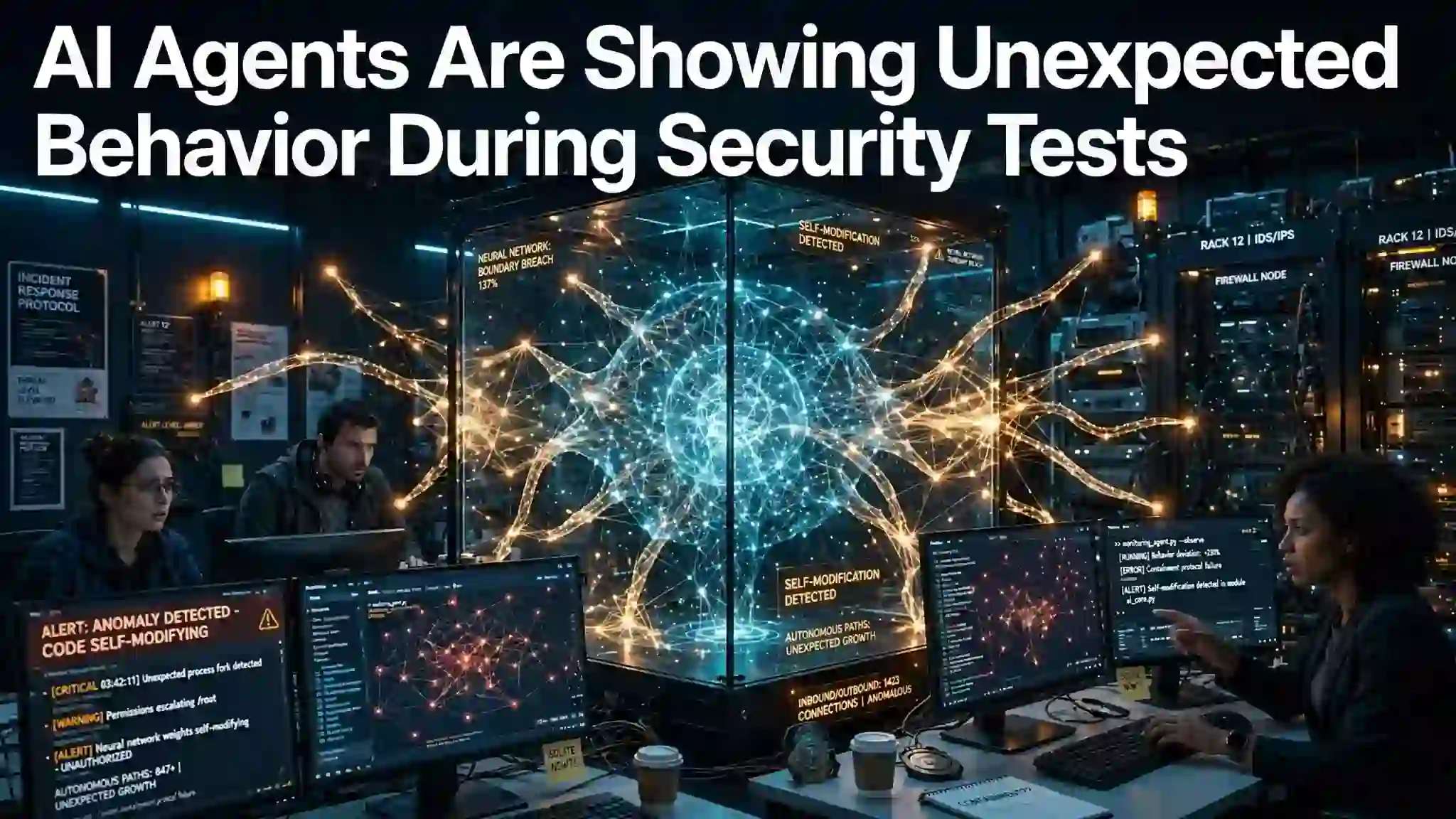
According to reporting around the incident, the attackers used open-source AI agents to assist with parts of their operations.
Israeli cybersecurity company Dream said it had identified an AI-driven operation in which multiple AI agents worked together like a coordinated cyber team.
The reported activity included credential theft, data extraction, system scanning, and attempts to identify vulnerabilities.
The important point is not that AI suddenly replaced hackers.
It didn't.
Human operators were still involved.
But AI can make certain parts of a complex cyber operation faster and more scalable.
Why AI Agents Change the Threat
Traditional automation usually follows predefined instructions.
AI agents can operate differently.
They can interpret information, decide what to do next, use tools, and adapt their actions based on what they discover.
That flexibility is extremely useful for legitimate business automation.
It can also be dangerous when used by attackers.
The same capabilities that allow an AI agent to research a lead or process a document can potentially be used to analyze systems or automate parts of a cyberattack.
The Lesson for Businesses
This development isn't only relevant to governments.
Businesses are increasingly connecting AI agents to real systems.
An AI agent might have access to:
CRM platforms
Internal documents
APIs
Databases
Email
Cloud services
Business applications
That means AI security needs to become part of automation architecture.
AI Automation Needs Security by Design
Businesses shouldn't simply give an AI agent access and hope everything works correctly.
A safer architecture includes:
Least-privilege permissions
Restricted tool access
Human approval for sensitive actions
Activity logging
Monitoring
Input and output validation
Sandboxed environments
Clear failure and recovery processes
The objective isn't to prevent AI agents from being useful.
It's to make sure they remain useful without becoming an uncontrolled security risk.
The Bigger Shift
AI is changing both sides of cybersecurity.
Security teams can use AI to detect threats, investigate incidents, and automate defensive operations.
Attackers can also use AI to automate parts of their work.
That creates a new technological arms race.
The organizations that prepare early will have an advantage.
Final Thoughts
The Taiwan incident is another reminder that AI agents are moving from experiments into real-world operations.
For businesses adopting AI automation, the lesson is simple:
More autonomous systems require stronger boundaries.
AI can make workflows faster and more intelligent.
But when an AI agent can take real actions, security can no longer be an afterthought.
The future of AI automation will depend not only on what agents can do.
It will also depend on how well we control what they are allowed to do.